Project
Airon Pneumatic
A headless and multilingual technical catalog in which products, documentation and future integrations can evolve as parts of the same system.
Industry, product and infrastructure
A technical catalog, designed to become a system.
Airon has a wide range of pneumatic components, variants and special solutions in international markets. The project had to make this complexity easy to explore in multiple languages and, at the same time, prepare a basis capable of supporting new tools tomorrow.
We have designed the experience and developed the frontend in Next.js on a headless architecture: content, product data and interface remain coordinated, but can evolve with different times and responsibilities.
Customer
Airon Pneumatic
Ambito
UX, headless, multilingual catalog
Technology
Next.js + CMS headless
Development
Configurator + management
The range opens for families, does not hide behind a list.
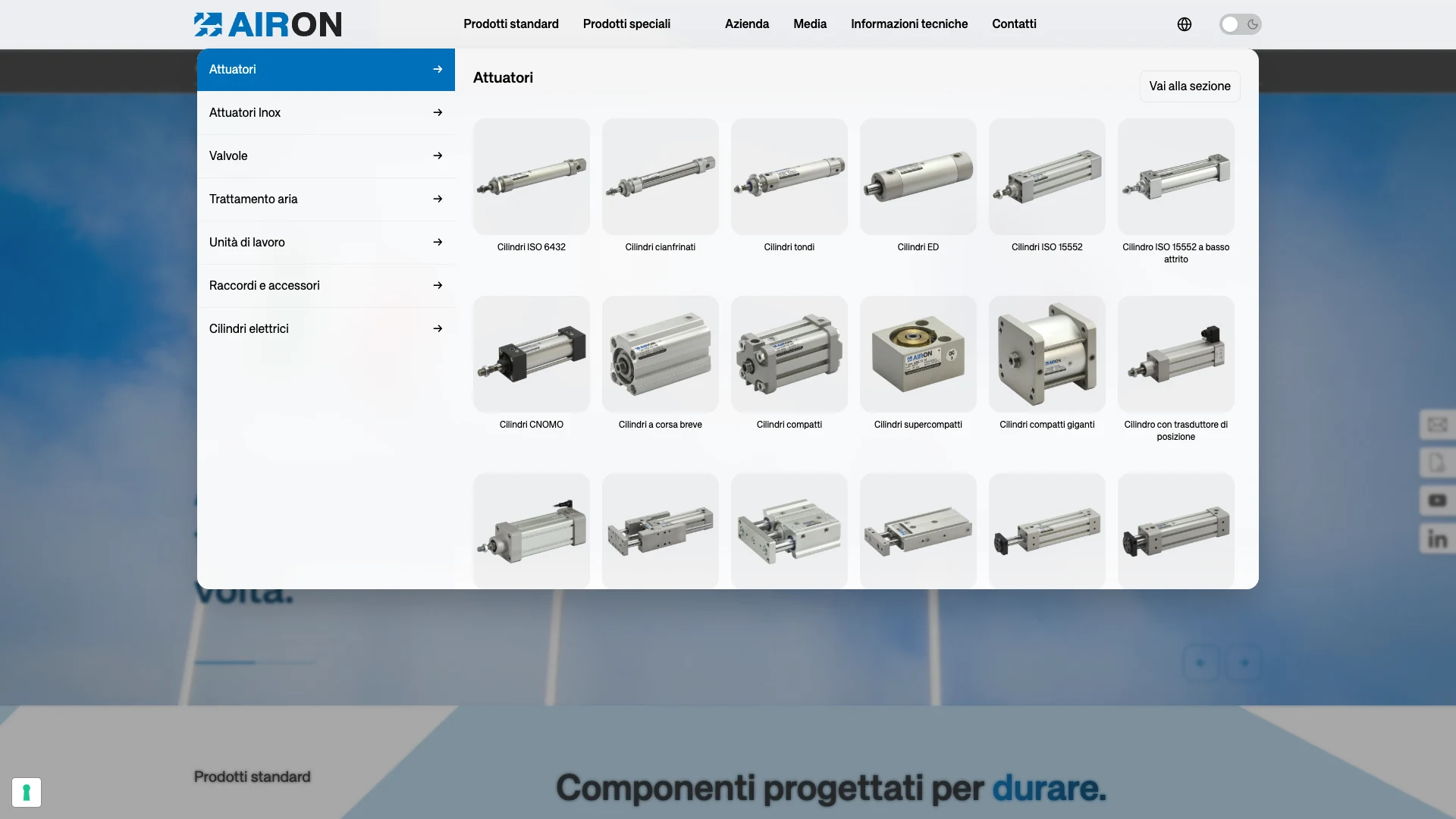
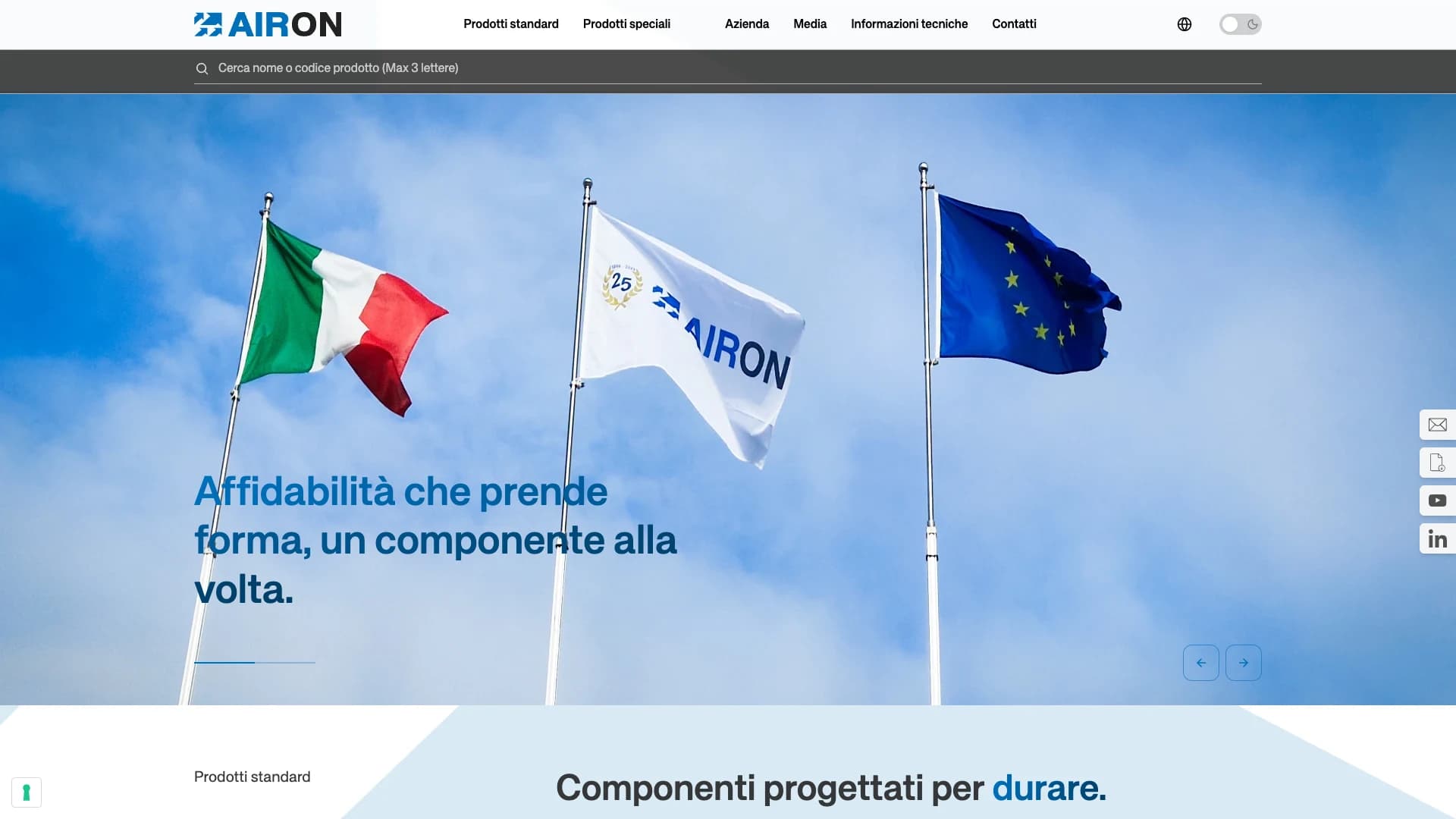
Standard products, special solutions, families and models form an articulated hierarchy. We have transformed it into a visual navigation that allows you to understand the offer before you even know the code of a component.
The megamenu exposes families and products; the archive maintains an overview. They are two levels of the same path, available in a coherent multilingual structure and designed for both those who explore and for those who already know what to look for.
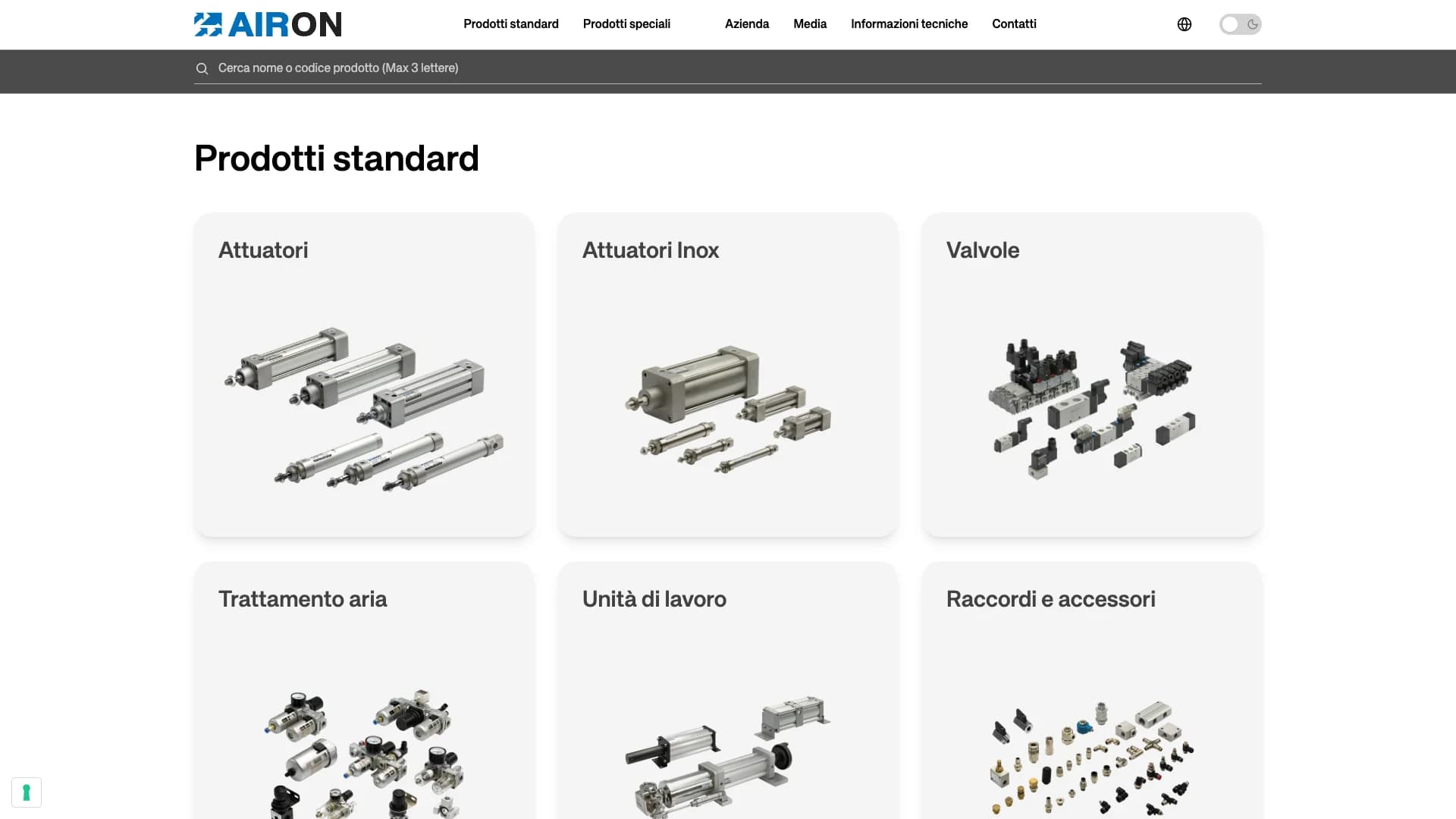
Each board gathers understanding, deepening and contact.
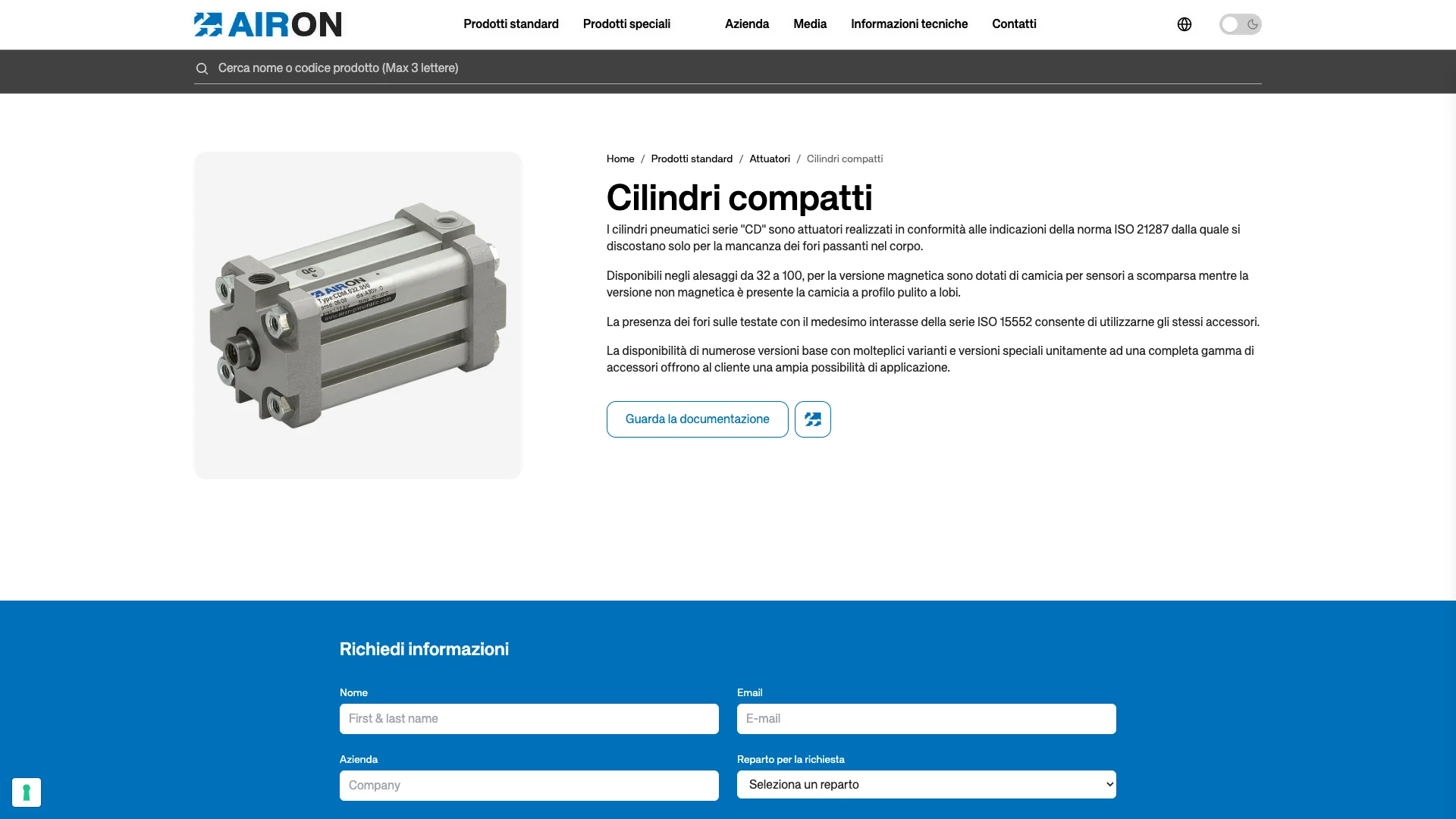
The product page puts together image, technical description, position in the range and useful actions. The user can navigate, deepen the documentation or send a request without losing the context.
The structure is repeatable on different ranges and leaves room for the specific characteristics of each component, avoiding rigid pages or built one by one.
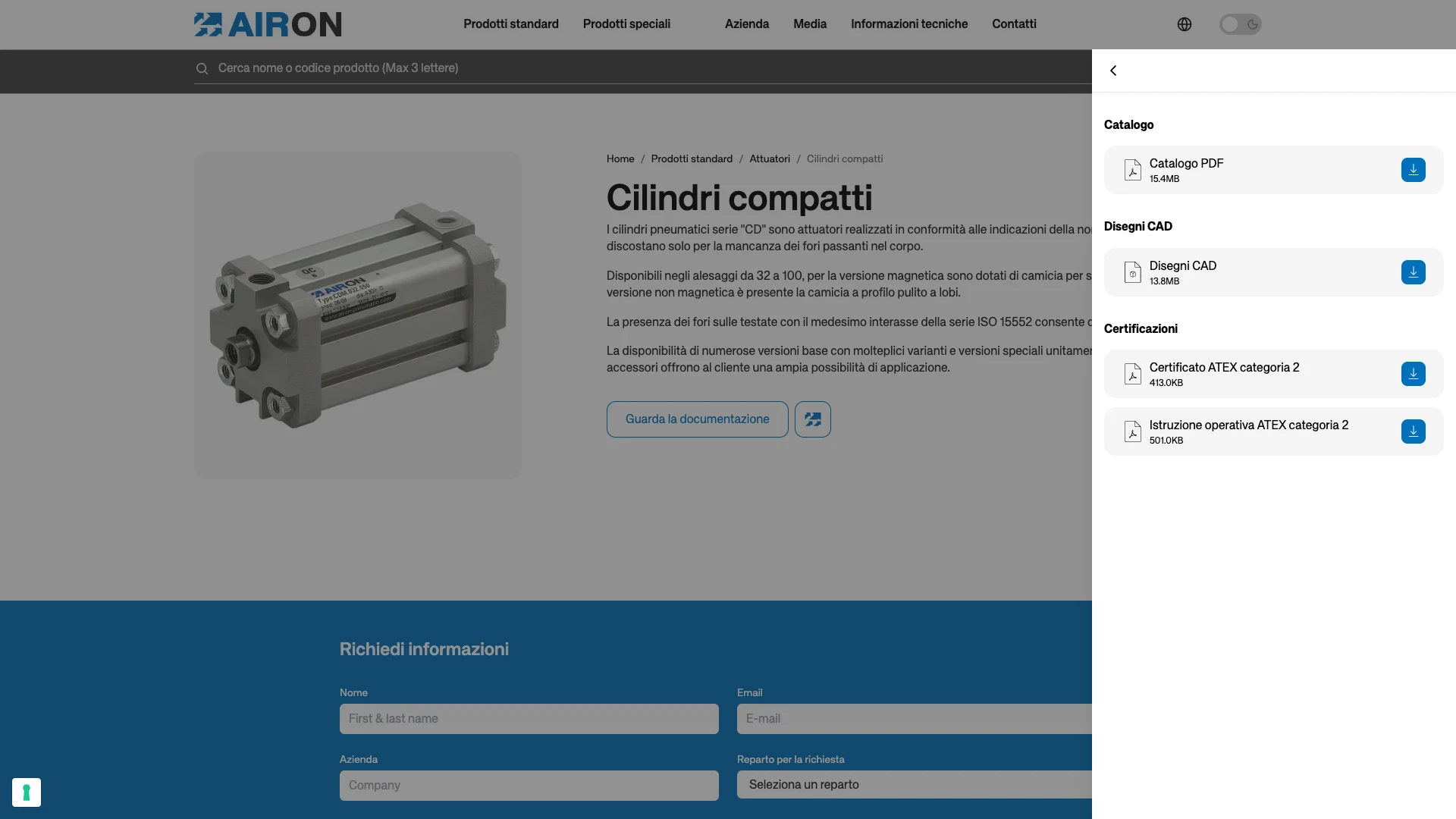
Catalogs, CAD and certifications follow the product.
The documentation does not live in a separate archive to be decrypted. Each card recalls the panel with relevant materials, sorted by type: catalogues, CAD drawings, certifications, manuals and software when available.
In this way the site accompanies not only the discovery, but also the technical evaluation and daily work of designers, retailers and customers.
Separating parts makes the system more free to change.
In the headless model the CMS organizes content and information, while Next.js builds the experience that people see. It is not an end-to-self technical choice: it allows to evolve the site without binding any changes to the same platform.
The interface can become faster and richer, language versions can be managed centrally and new services can read the same data. For Airon it means having a more agile perimeter, scalable and ready to welcome successive markets and integrations.
The configurator can enter the system without becoming an isolated project.
The architecture was also chosen to prepare a future product configurator connected to the Airon management. The goal is to guide the selection of variants, transfer choices to the company system and generate structured order requests.
This integration has not yet been achieved. The headless base, however, is already designed to add it with a more controlled range of action, without having to reconstruct the existing catalogue and experience.
The result
A platform that communicates today. And can operate tomorrow.
The public catalogue is already useful and complete; its architecture allows to add services and connections without starting from scratch.
Headless
Independent evolution
Interface, content and data can grow with different times while maintaining a consistent system.
Products + documents + languages
Connected knowledge
Range, boards and technical materials accompany the same path on different markets.
Configurator → management
Provisional perimeter
The future flow of configuration and order request is provided by architecture, but not yet implemented.
Let’s build something useful.