UX/UI design
We do not draw screens. We design decisions.
We transform needs, content and processes into simple and natural digital experiences to use.
Our approach
The shape comes after understanding what must happen.
A good experience does not ask people to adapt to the system. Organize information, actions and priorities so that every step is understandable: find what you need, compare alternatives, complete an activity or return without having to start over.
This is why UX and UI are not two isolated phases. Research, architecture, content, prototyping and visual language proceed together, comparing with business goals, technical constraints and real use contexts.
What we put in the project
From the right question to the right interface.
Each activity reduces a different type of uncertainty and makes decisions verifiable before development.
- 01
Research and discovery
Objectives, people, data and constraints become a shared basis on which to make decisions.
- 02
Information technology
Contents and functions are arranged in comprehensible, scalable and scalable structures.
- 03
User journeys and flows
We make visible steps, alternatives, errors and decision points along the experience.
- 04
Wireframe and prototypes
We simulate the use before the code to confront us on behaviors and priorities, not on interpretations.
- 05
UI and design system
Components, hierarchy and visual rules build consistency on pages, devices and products.
- 06
Test and evolution
Accessibility, usability and data guide corrections and improvements even after release.
The process
We understand first. Then we make it simple.
The route is iterative: every step produces something to discuss, try and improve together.
- 01
Observe
We collect goals, content, data, constraints and needs of people.
- 02
Map
We order complexity in architectures, paths and shared priorities.
- 03
Prototyping
We transform hypotheses into navigable experiences and concrete scenarios.
- 04
Valid
We test, correct and prepare a clear system for development and evolution.
Before the screens
The design makes the operation visible.
Maps, flows and prototypes allow to see relationships and consequences when changing costs still little. This is where a desperate navigation becomes a structure, a complex process finds a sequence and an abstract requirement turns into a verifiable behavior.
Before the interface there is a map.
Information architecture describes how pages, content, search and decisions connect. It reveals alternative paths, dependencies and edge cases before they become navigation or development problems.
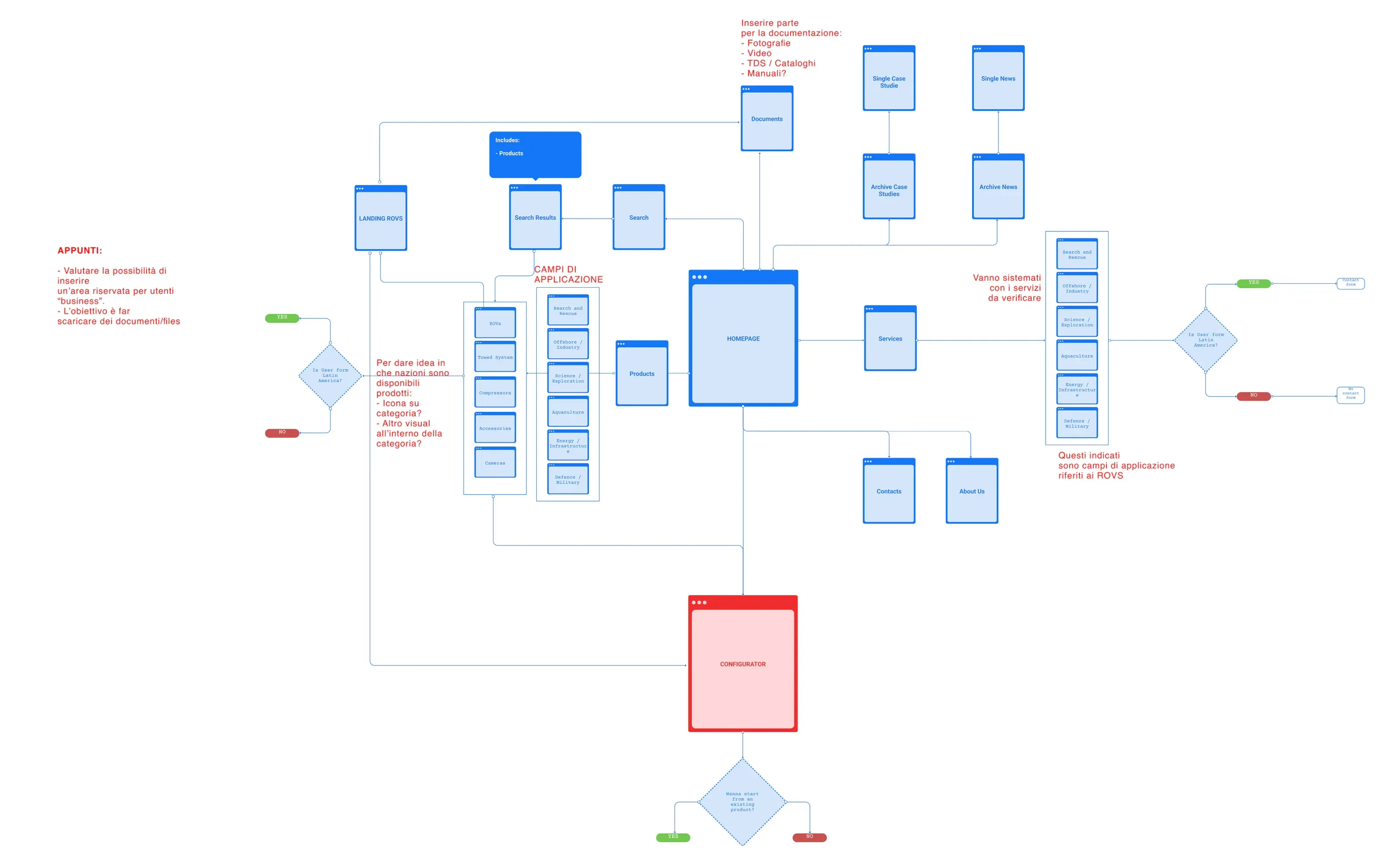
Prototypes to try the path, not to imagine it.
We connect screens in navigable sequences to see if people know where to go, what to expect and how to complete an activity. The comparison takes place on a concrete experience: explore, choose, decide and conclude.

UI design
Consistence is not repetition. It's orientation.
Typography, colors, spaces, components and states build a recognizable language. A design system does not only serve to maintain order: it makes it quicker to understand what is clickable, what is important, what is happening and how to recover from an error.
The rules are designed for real content, responsive, accessibility and development. Thus the interface remains consistent even when the product grows, changes data or new functions are added.
A system accompanies the direction to decision.
Homepage, theme trails, archives and details are not independent pages. They share hierarchy, components and behaviors to accompany people other than the first contact to the information or action they need.

From prototype to product
The project continues even when we begin to develop.
We support the technical team during implementation, define responsive behaviors, states, content and limit cases. The passage from Figma to the code is not a closed box delivery, but a continuous collaboration.
We test the result on the intended devices and contexts, verify accessibility and consistency and collect what emerges from use. Good experience is never frozen: it has solid rules and space to improve.
Let’s build something useful.